The Marine Planning team is dispersed across England. Bringing colleagues together provides an opportunity to share knowledge and gain a greater understanding of how marine planning benefits local communities, businesses, and wildlife. In June, the team visited the North Yorkshire Coast to explore some of these topics.
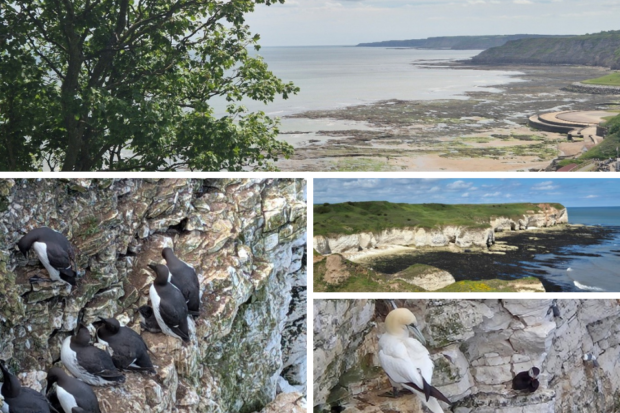
Our first stop was a site visit to RSPB Bempton Cliffs Reserve, one of the UKs most impressive seabird colonies. The white chalk cliffs are home to nesting gannets, guillemots, razorbills, herring gulls, and puffins amongst other species, and hosts the largest population of mainland seabirds in the UK.
The colony has benefited from the closure of the commercial sand eel fishery with sand eels being an important food source for many seabird species, supporting breeding success in the region. The chalk grasslands along this section of coastline are also a designated Site of Special Scientific Interest (SSSI), protected due to the number of specialist plants that create important nesting habitats.
The team then travelled further down the coast to Flamborough Head, a Special Area of Conservation (SAC) and Special Protection Area (SPA) designated for its internationally important habitats and bird populations. The Yorkshire Marine Nature Partnership joined us at the site and shared their seasonal challenges and experience with managing the Marine Protected Areas (MPAs) though partnership working, collaboration and evidence gathering.
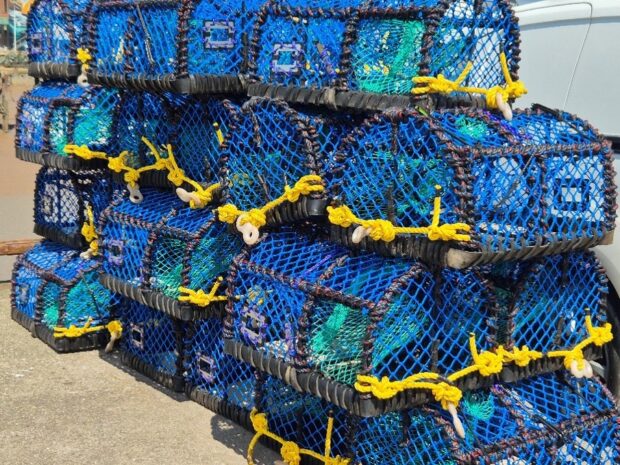
At Bridlington Harbour, we had an overview of the work completed by North Easten IFCA which was our final stop on day one. They shared the impact of the Shellfish Permit Byelaw which imposes a maximum of 1,000 commercial pots for crab and lobster, the local areas main catch, to support the sustainable management of shellfish fisheries.
A dawn visit aboard the SeaGrown vessel provided an opportunity to see their 25-acre seaweed farm off the Scarborough coast on day two. SeaGrown’s work highlights how marine activities can be planned and managed to deliver environmental, social, and economic benefits in the same space. Their Kelpedo seaweed cultivation system aims to support biodiversity, improve water quality, and create habitat for marine wildlife, demonstrating a practical example of sustainable co-existence in the marine environment.
Throughout the visit, the team saw examples of how marine planning and wider marine management measures support the sustainable use of marine space while protecting and enhancing the natural environment. These outcomes closely align with the objectives of marine plans, which seek to balance environmental, social, and economic benefits for current and future generations.
These site visits energised the team and demonstrated how activities in and around the coast support marine and coastal ecosystems, contributing to carbon sequestration, enhanced biodiversity, and improved socio-economic benefits though tourism, and community wellbeing.
The visit demonstrated several key themes reflected in marine plan policies, including biodiversity enhancement, sustainable fisheries management, and the coexistence of environmental restoration with tourism and recreation.
Thank you to everyone involved for your time and for sharing your expertise and demonstrating the positive difference being made in the marine and coastal environment.
Recent Comments